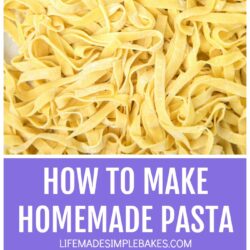
Say goodbye to store-bought and hello to Homemade Pasta Noodles! Crafting your own pasta noodles is surprisingly simple, and the result is irresistibly superior in taste and texture.

Pasta is part of my favorite comfort foods. While store-bought pasta works just fine in recipes, if you have a bit of extra time, this homemade pasta is far superior. I mean, nothing quite compares to the fresh taste of chewy pasta made from scratch.
Light and delicate, fresh pasta is worth the effort. You will fall in love with the texture and taste, and really just work with your hands! Try topping these tasty morsels with Instant Pot Meatballs, or Easy Chicken Piccata, or use them in your favorite pasta dish such as Bruschetta Chicken and Pasta.
Table of Contents
Why I Love This Homemade Pasta
- Homemade pasta dough has a richness that’s hard to find in packaged varieties.
- Kneading and rolling the dough can be both relaxing and rewarding.
- There’s nothing like the feeling of creating something from scratch with such a big payoff!
Recipe Ingredients
Italian “00” Flour – Creates a silky, smooth dough with its fine texture.
Eggs – Adds richness and a tender texture to the pasta.
Olive Oil – Subtle flavor and helps make your fresh pasta dough smooth.
For a full list of ingredients and amounts, see the recipe card below.
Variations
Pasta Shapes to Try – Use a ravioli maker for perfect pockets, or cut small circles for tortellini, fold, and seal with water. For lasagna, cut large sheets and let them dry on a drying rack. To make bowties, cut small squares and pinch in the middle.
Healthy Add-Ins – For a healthier twist, use half whole wheat and half all-purpose flour. Add greens by incorporating torn spinach leaves. You can also swap in ¾ quinoa flour and ¼ potato starch for a protein boost.
How to Make Homemade Pasta Noodles
Step 1: On a clean work surface, add the flour to a mound. Sprinkle salt over the top. Create a well in the center of the flour, then add the eggs.

Step 2: Gently mix the eggs, then gradually add in flour. Knead the pasta dough for about 8-10 minutes or until a stiff, tacky dough forms.

Step 3: If the dough is too dry, add a ½ tsp of water. If the dough is too sticky, sprinkle in a little more flour.
Step 4: Cover the dough with plastic wrap or a damp kitchen towel and allow it to rest at room temperature for 50 minutes. Divide the dough into two.
Step 5: To roll the dough, start on the largest or widest setting (crank or KitchenAid attachment), usually a 6. Carefully run one-half of the dough through it, then again on the same setting. Fold the dough into thirds (a book fold). Then start to adjust the machine to a thinner setting after each pass until you reach a 2 or 3. I find that in general, a 3 is the perfect thinness.

Step 6: Use a separate attachment/part of your machine to cut the pasta into desired shapes, or you can do this by hand. Simply use a pizza wheel or ravioli press.
Step 7: In a large pot of salted boiling water, cook pasta for 3-4 minutes, remove and serve.

Methods to Make The Dough
By Hand – Making pasta dough by hand is the classic method. Place flour in a mound on the counter, make a well, add the eggs, and drizzle in the oil. Whisk the eggs, then mix in the flour. Knead for about 10 minutes until smooth and elastic.
Stand Mixer – Use the dough hook to mix until the dough is smooth and elastic. If it’s sticky, add a bit more flour.
Food Processor – Pulse the ingredients until crumbly. Then knead by hand for about 2 minutes until the dough is smooth and elastic.
Cutting and Forming the Noodles
You can easily cut your pasta with a pasta maker, using the cutting attachment for even slices. The KitchenAid pasta roller works the same way.
If you don’t have a pasta machine, roll your dough out using a rolling pin into a sheet about 1-2mm thick, thin enough to see your hand through it for a spaghetti or angel hair pasta texture. Then, use a pizza cutter or sharp knife to slice the noodles to your desired width.
FAQs
Yes, letting the dough rest is important. It helps the gluten relax, making the dough stronger, more pliable, and easier to roll and cut. Skipping this step may cause the dough to fall apart when rolling.
For quicker drying, hang the pasta on pasta drying racks or a clean rod like a clothes hanger. You can also swirl the cut pasta into “nests” and place them on a lightly floured surface for about 30 minutes. Be gentle after drying, as the pasta will become brittle.
Storage Info
STORE homemade pasta by dusting it with a little flour and placing it in an airtight container; it stays good for up to 3 days in the refrigerator. To FREEZE, lay it flat on a baking sheet to freeze, then transfer to a bag or container and it will stay good for up to 2 months.
To REHEAT, simply boil it for a few minutes until heated through. There’s no need to thaw frozen pasta before cooking; it can go directly from the freezer into boiling water. If using frozen fresh pasta noodles, let them thaw in the fridge for 4-6 hours before cooking like normal.
Serve Homemade Pasta with These Dishes

Homemade Pasta Noodles Recipe
Ingredients
- 1 2/3 cup Italian “00" flour - or all-purpose flour
- 3 large eggs
- 1/2 tbsp olive oil
- 1/2 tsp salt
Instructions
- On a clean work surface, add the flour to a mound. Sprinkle salt over the top. Create a well in the center of the flour, then add the eggs.
- Gently mix the eggs, then gradually add in flour. Knead the pasta dough for about 8-10 minutes or until a stiff, tacky dough forms.
- If the dough is too dry, add a ½ tsp of water. If the dough is too sticky, sprinkle in a little more flour.
- Cover the dough with plastic wrap or a damp kitchen towel and allow it to rest at room temperature for 50 minutes. Divide the dough into two.
- To roll the dough, start on the largest or widest setting (crank or KitchenAid attachment), usually a 6. Carefully run one-half of the dough through it, then again on the same setting. Fold the dough into thirds (a bookfold). Then start to adjust the machine to a thinner setting after each pass until you reach a 2 or 3. I find that in general, a 3 is the perfect thinness.
- Use a separate attachment/part of your machine to cut the pasta into desired shapes, or you can do this by hand. Simply use a pizza wheel or ravioli press.
- In a large pot of salted boiling water, cook pasta for 3-4 minutes, remove and serve.








I was hesitant about making homemade noodles but they came out great! Texture was way better than store-bought.
I don’t make my own pasta often, but this is the recipe I use, when I do! It’s so easy & my kids think it’s fun to help!