Bake like a pro with our 4 Ingredient Artisan Bread recipe! Only 4 simple ingredients for a flawless, delectable loaf. It’s so easy, it’s practically magic – a sure family hit!

Making bread at home can seem like daunting task. That’s why I’m sharing this super easy and effortless no-knead artisan bread. Once you make this you will want to make it over and over again. It is hard and crispy on the outside and then warm and fluffy on the inside making it the perfect bread for any occasion!
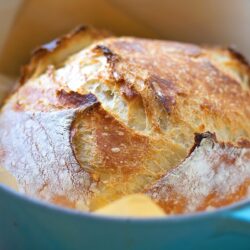
While it is foolproof, it is sure to make you look like a pro! It just looks so pretty, doesn’t it? Try pairing this crusty loaf of deliciousness with Homemade Tomato Soup, Instant Pot Spaghetti, or Perfect Pot Roast.
Table of Contents
Reasons Why I Love This Bread
- No kneading required, this easy Artisan bread recipe is easy and effortless.
- This Artisan loaf only needs four basic ingredients.
- This 4 ingredient bread has a long shelf life and stays fresh longer than typical homemade bread.
Recipe Ingredients

- All-Purpose Flour: Flour provides structure. Its mild, slightly nutty taste supports other flavors and creates a soft, chewy texture.
- Kosher Sea Salt: Enhances flavor significantly and the bread’s taste with its mineral-rich, clean profile.
See the recipe card for full information on ingredients and quantities.
Variations
- Use a Flour Alternative: Mix half all-purpose flour and half whole wheat flour. This maintains moisture while adding nutritional benefits, without risking the bread becoming too dry, as artisan bread typically has a very moist crumb. For a chewier texture and a stronger structure, consider using bread flour as part of your flour mixture.
- Gluten-Free Flour Caution: Avoid using gluten-free flour for this recipe, as it doesn’t provide the necessary rise, essential for artisan bread’s texture and structure.
- Add Greek Yogurt: Incorporate about ¼ cup of plain Greek yogurt to create a “cheater’s sourdough.” This adds a tangy, sourdough-like flavor without the lengthy process of making true sourdough bread.
How to Make No Knead Artisan Bread
Step 1: Whisk the flour, salt, and yeast in a medium bowl. While stirring with a wooden spoon, gradually add the water, stirring until incorporated. Gently mix the dough and form it into a rough ball.
Step 2: Transfer to a large clean (ungreased) bowl. Cover with plastic wrap and let the dough rise in a draft-free area at room temperature until the surface of the dough is covered with tiny bubbles and the dough has more than doubled in size. This usually takes about 18 hours, however, it still turns out great with just 12 hours of rise time.

Step 3: When the dough is ready, place a Dutch oven inside the oven and turn it on to 450 degrees Fahrenheit (232 degrees Celsius). Allow it to heat in the oven for 30 minutes.
Step 4: Meanwhile, transfer the dough to a well-floured surface. Take the corners and fold under, creating a ball. Place on a large square of parchment paper (big enough to cover the bottom of your Dutch oven). Dust the dough with flour, cover it with plastic wrap, and allow it to rest for 15 minutes. Using a sharp knife, at a 90-degree angle, score an X on the top of the loaf. Note: Each score mark should be about 2 ½ inches long and about 1/4″ deep. Using a mister, spray bottle, clean toothbrush, or pastry brush, lightly mist (or brush) the top of the bread with water.

Step 5: Carefully remove the Dutch oven from the oven. Place the shaped dough into it, cover, and return to the oven to bake for 30 minutes. Remove the lid and bake for an additional 8-15 minutes, or until the top is nice and dark (but not burnt). Remove from the oven and transfer the loaf of bread to a cooling rack. Allow it to cool for at least 30 minutes before slicing.

Expert Tips
Due to the high hydration of no-knead artisan bread dough, it can be sticky. Dust your hands and work surface with flour while shaping to prevent sticking. Shaping directly on a piece of parchment paper simplifies the process and eases transfer to the baking dish. Lift the parchment paper with the dough and place it in the baking vessel for a mess-free and seamless transfer, maintaining the dough’s shape.
Dutch Oven Notes:
I noticed that the outside of my Dutch oven got pretty speckled after baking this bread (it had a few stains from other recipes as well), and it didn’t look very pretty anymore.
How to Clean: The cheapest and most effective cleaning solution I’ve found is a nylon pot scrubber and a paste of hydrogen peroxide and baking soda. Generously apply the paste to troubled areas and scrub away. You’ll need to put a little elbow grease into it, especially where grease has been baked on, but it should all come off!
Frequently Asked Questions
This crusty bread recipe pairs wonderfully as a side with pasta dishes. Enjoy it alongside recipes like Kale, Spinach, and Basil Pesto Baked Pasta, Best Ever Baked Ziti, Quick and Easy Garlic Butter Noodles, Instant Pot Spaghetti, or Chicken Tetrazzini for a delightful meal.
Yes, you can use rapid-rise yeast (instant yeast) in place of active dry yeast for no-knead artisan bread. It may slightly speed up the fermentation process, so keep an eye on the dough’s progress.

Storage Info
No-knead artisan bread can be kept at room temperature for up to 3 days, ideally wrapped in a clean cloth or stored in a paper bag to preserve its crusty exterior. If you prefer to store your bread on the counter, ensure it’s in a cool, dry spot away from direct sunlight.
To FREEZE, place the bread in a sealed plastic bag and store it for up to 3 months. When you’re ready to enjoy it, THAW the bread at room temperature. To revive the crust, lightly sprinkle water over the bread and reheat it in a preheated oven at 350°F (about 177°C) for approximately 10 minutes, or until the crust becomes crispy once more.
More Bread Recipes to Try
4 Ingredient Artisan Bread Recipe
Ingredients
- 3 1/4 cup all purpose flour
- 1 ½ – 2 tsp salt - kosher sea salt
- 1/2 tsp active dry yeast
- 1 1/2 cup warm water
Instructions
- Whisk the flour, salt, and yeast in a medium bowl. While stirring with a wooden spoon, gradually add the water, stirring until incorporated. Gently mix the dough and form it into a rough ball.
- Transfer to a large clean (ungreased) bowl. Cover with plastic wrap and let the dough rise in a draft-free area at room temperature until the surface of the dough is covered with tiny bubbles and the dough has more than doubled in size. This usually takes about 18 hours, however, it still turns out great with just 12 hours of rise time.
- When the dough is ready, place a Dutch oven into the oven and turn it on to 450 degrees Fahrenheit (232 degrees Celsius). Allow it to heat in the oven for 30 minutes.
- Meanwhile, transfer the dough to a well-floured surface. Take the corners and fold under, creating a ball. Place on a large square of parchment paper (big enough to cover the bottom of your Dutch oven). Dust the dough with flour, cover it with plastic wrap, and allow it to rest for 15 minutes. Using a sharp knife, at a 90-degree angle, score an X on the top of the loaf. Each score mark should be about 2 ½ inches long and about 1/4" deep. Using a mister, spray bottle, clean toothbrush, or pastry brush, lightly mist (or brush) the top of the bread with water.
- Carefully remove the Dutch oven from the oven. Place the shaped dough into it, cover, and return to the oven to bake for 30 minutes. Remove the lid and bake for an additional 8-15 minutes, or until the top is nice and dark or golden brown (but not burnt). Remove from the oven and transfer the loaf of bread to a cooling rack. Allow it to cool for at least 30 minutes before slicing.
VIDEO
NOTES
- Please use coarse Kosher sea salt, NOT table salt.
- For a really crunchy loaf, allow the loaf to “cool” for 30 minutes on the rack of a partially open (and OFF) oven, just like you would a cheesecake. Remove and slice!











Having the same wet dough issue as Julie Edelstein. Has the dough not rised/fermented long enough? When is turned out it holds no shape at all. Any suggestions?
Sometimes this happens to me and I have no idea why. The first few times I made it the dough was a blob. It still baked up beautifully. You can always try bread flour next time, which will yield a slightly denser loaf.
What size dutch oven do you use for this recipe?
When I mix all ingredients, it doesn’t form a ball at all! It’s like a wet mix. I’ve tried this recipe 4 times now-even using a scale to measure weight of flour,but it always comes out very wet. Help!
The initial mix is lumpy and doesn’t resemble a ball. After the initial long rise, it should get bubbly. Then, once it’s turned out on a floured surface and you fold the corners over, that’s about the only time it’ll resemble a ball. 🙂
I would guess too much water. I added too much once because it seemed so dry and it was too wet and sticky.
A note I would add is if you make this ahead of time, don’t cover it, the moisture will soften the crust. If I make this a day in advance, I’m sure I can reheat it to get it crusty again but, if so, do you suggest that I slightly under bake it the first time around?
Hi Emily. I actually learned a few good tips from how my local grocery store packages their freshly baked artisan bread. If you want a soft crust, store it in plastic, and if you want a hard crisp crust, store it in a paper bag. Hope that helps!
Hi Natalie,
Excellent bread recipe! I thought I’d share that I have a very nice cast iron Dutch oven and because it’s so heavy I place it upside down in my oven when preheating. Then, after at least 30 minutes, I lift off the main part of the oven and place my dough on the lid (mine has small spikes on it so it holds the dough, plus I make sure the handle on the lid is between the rack rungs.) Then I mist the bread and put the base back on. It worked very well!
I’m wondering if you have a suggestion for altering the flour used so that I get a darker sponge and it’s a little more like a bakery peasant loaf (very crusty yet lovely inside?)
Thank you for any suggestions you have and (again) for the great bread recipe!