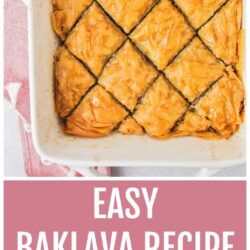
This Baklava recipe is a is a rich, flaky pastry made with layers of buttery phyllo dough, chopped nuts, and a sweet syrup, creating a crisp, sticky, and irresistibly sweet dessert.

Baklava is a decadent, layered pastry made with delicate sheets of buttery phyllo dough, finely chopped nuts, and a sweet honey or sugar syrup that soaks into every crisp, flaky bite. Baked until golden and cut into neat squares or diamonds, it delivers the perfect balance of crunch and stickiness with warm notes of cinnamon and toasted nuts. Everyone will love this one of a kind treat!
For more tasty treats, you have to check out my Perfect Candied Nuts, Pistachio Layer Cake, and Swedish Visiting Cake Bars.
Table of Contents
What is Baklava?
Baklava pastry is a Middle-Eastern dish made from layers of phyllo dough filled with nuts and covered in honey. It originated in the Ottoman Empire, though Turks and Greeks often debate who invented it first.
This sweet dish combines buttery and nutty flavors. The honey’s sweetness complements the salty and nutty flavor of the walnuts.
Turkish baklava uses sugar syrup, pistachios, and lemon juice, while Greek baklava uses honey, walnuts, and cinnamon. Both types layer nuts between phyllo dough.
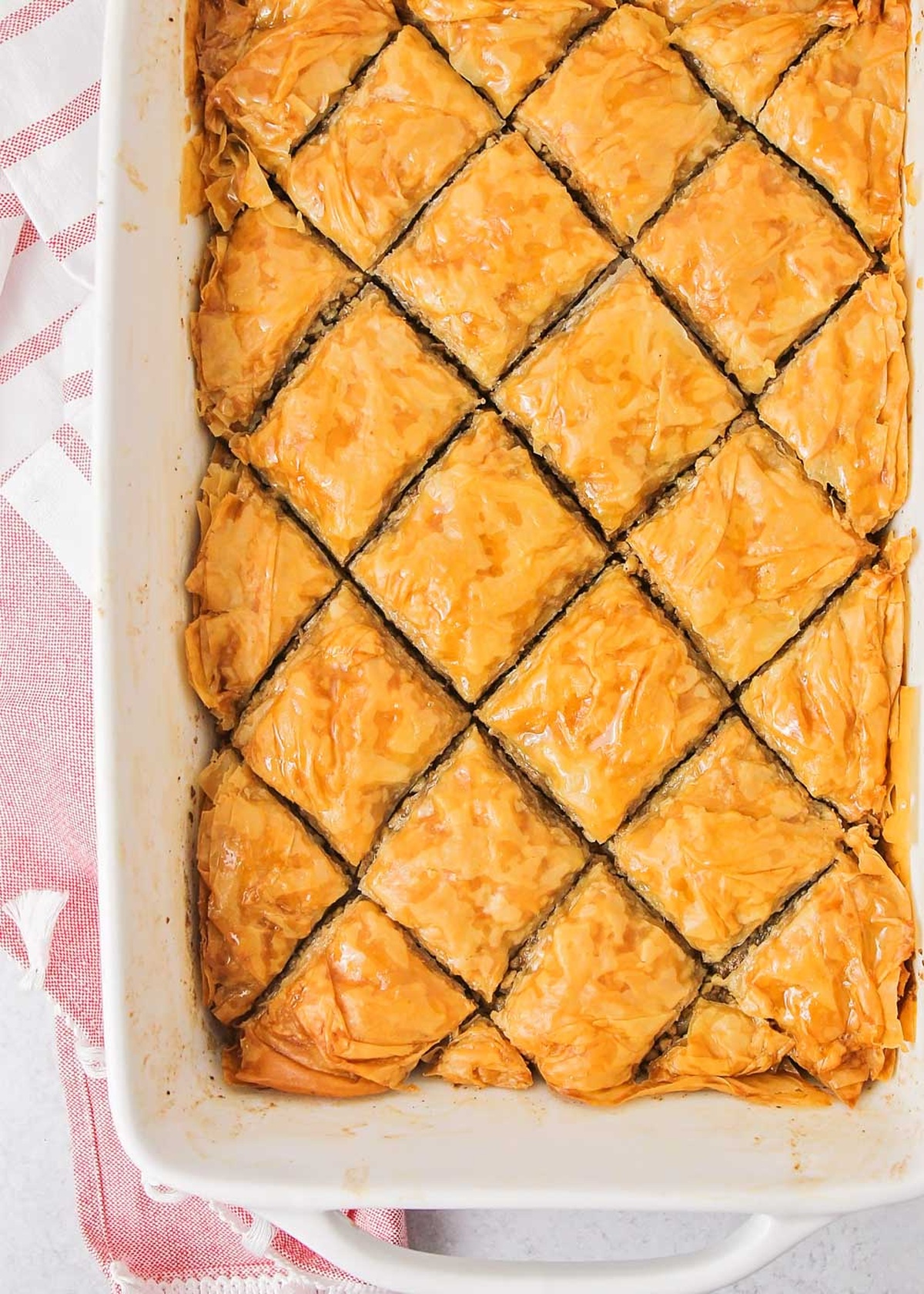
Why We Love Homemade Baklava
- The rich history behind puff pastry baklava makes it even more special to enjoy.
- Despite the complex flavor, a baklava recipe uses simple, everyday ingredients.
- Baklava stays fresh for days, making it a great make-ahead dessert.
Recipe Ingredients
- Chopped Nuts: Walnuts, pecans, or pistachios add a rich, nutty flavor and a satisfying crunch.
- Ground Cinnamon: A touch of cinnamon adds warmth and a bit of spice.
- Honey: Honey gives baklava its signature sweetness and sticky texture.
See the recipe card for full information on ingredients and quantities.
Variations
- Puff Pastry Substitute: Phyllo dough is light and crumbly, whereas puff pastry is denser. You can use puff pastry if you’re in a pinch, but it won’t give you that authentic baklava texture.
- Sauce/Syrup: The classic honey syrup in this recipe is made with sugar, water, honey, and vanilla. For a citrusy twist, try adding some orange or lemon zest and juice to the syrup.
How to Make Baklava
Step 1: Thaw the phyllo dough according to the package directions.
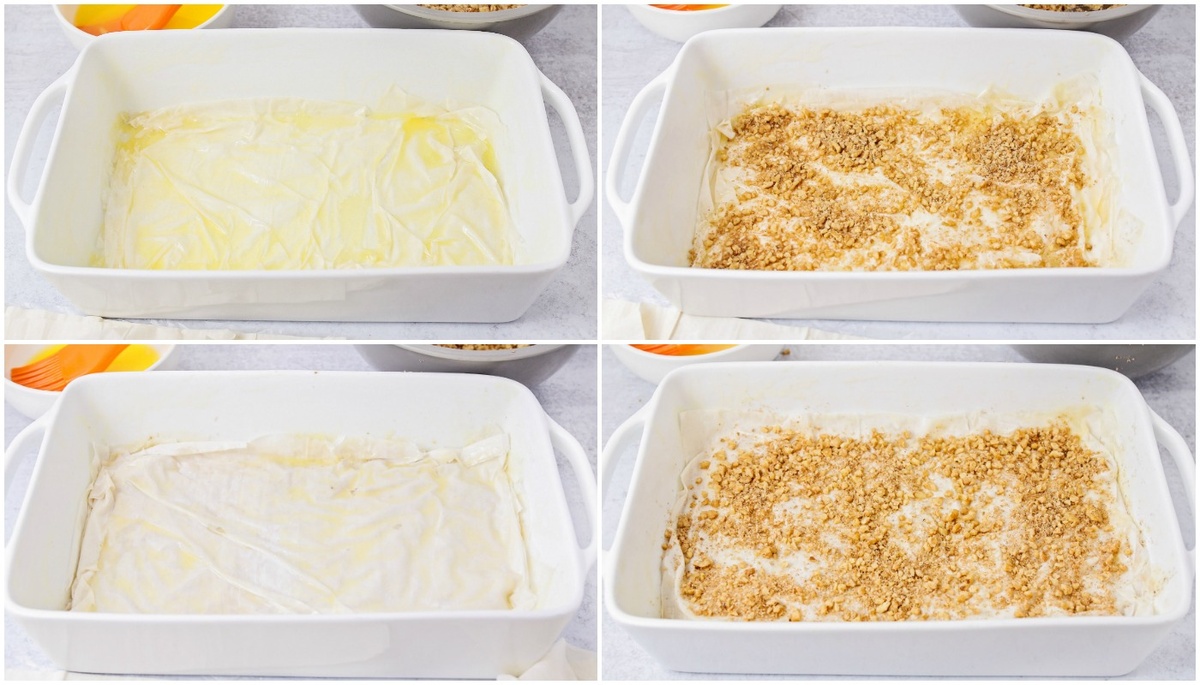
Step 2: Preheat the oven to 350°F (175°C). In a medium bowl, mix together the chopped nuts and cinnamon. Brush the sides and bottom of a 9 x 13 baking dish with melted butter.
Step 3: Place two sheets of phyllo dough in the bottom of the pan, and brush with melted butter. Add another two sheets and brush with butter. Add two more sheets of phyllo dough, then brush with melted butter.
Step 4: Sprinkle about two tablespoons of nuts on top of the dough, spreading evenly. Layer another two sheets of dough on top of the nuts, and brush with melted butter. Continue to alternate adding nuts and layers of dough, brushing the top of each dough layer with butter, until all of the nuts are used up.
Step 5: Layer two sheets of dough on top of the last nut layer, brush with butter, and repeat twice more so that the top layer of dough is six sheets deep.
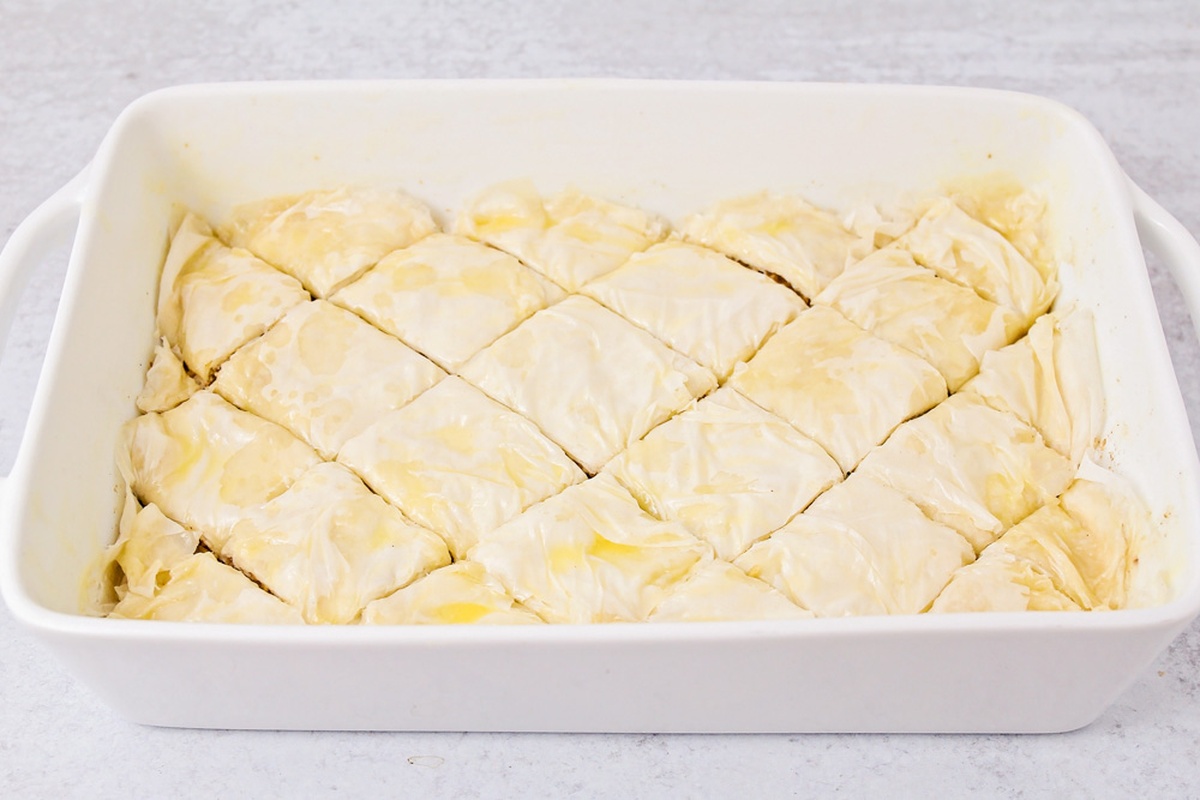
Step 6: Using a sharp knife, cut the baklava diagonally into rows, then turn the pan and cut the opposite way diagonally, to form diamond-shaped pieces. Bake in the preheated oven for 50 minutes, until golden brown on top.
Step 7: While the baklava is baking, make the syrup by stirring together the water and sugar in a medium saucepan. Bring the water and sugar to a simmer over medium heat, then stir in the vanilla and honey. Simmer for 20 minutes, until thickened slightly.
Step 8: Pour the syrup over the hot baklava, spreading evenly. Let cool completely, then cut into pieces.
Expert Tips
- Keep Phyllo Dough Covered: While working, keep the phyllo sheets covered with a damp towel. This prevents them from drying out and becoming brittle.
- Preventing Baklava from Falling Apart: Partially cut the baklava into diamonds before baking. This helps when cutting into individual pieces later. Since phyllo dough is naturally crumbly, it’s best to enjoy baklava with a fork.
FAQs
Absolutely! You can try almonds, hazelnuts, or even cashews. Each type of nut brings its own unique flavor and texture, giving your baklava a delicious twist.
No, you don’t need a food processor, but it can be very helpful. It makes chopping the nuts quick and easy, ensuring they are finely and evenly chopped for the perfect baklava texture.
Storage Info
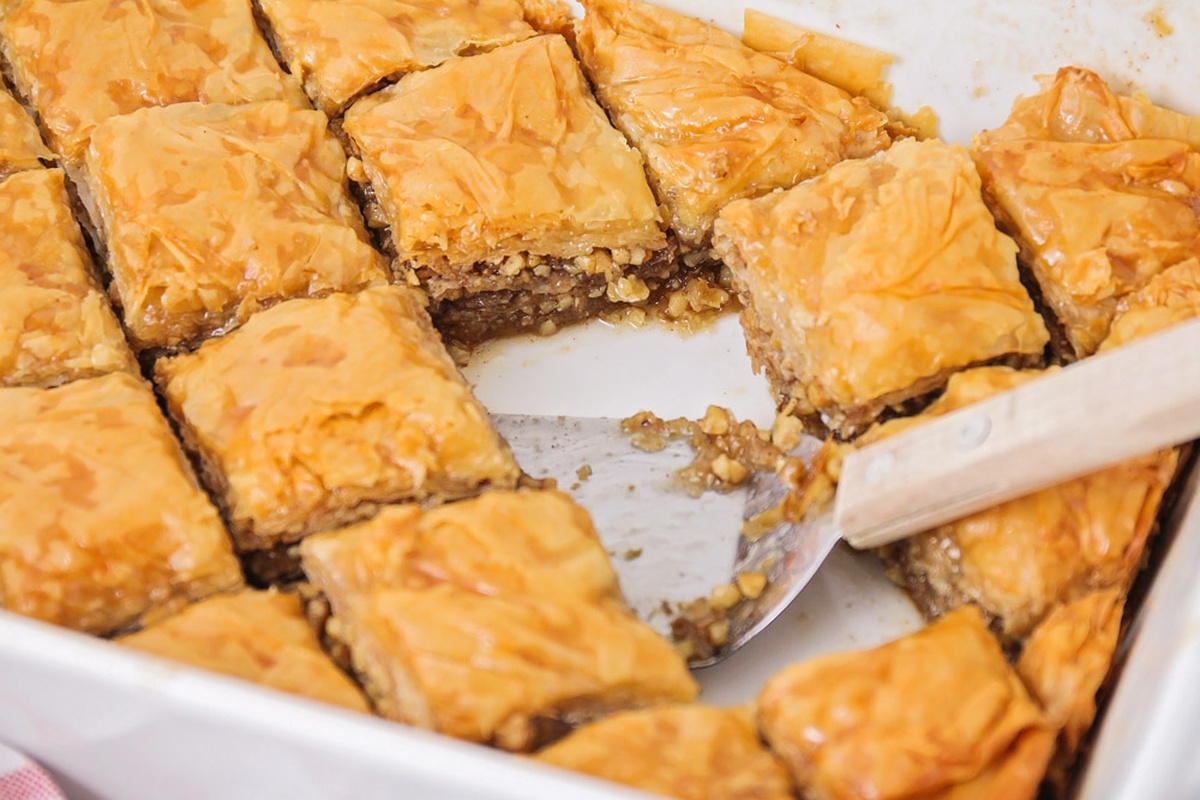
Baklava should be served at room temperature. After baking, let it sit for 4-6 hours or overnight for the syrup to soak through all the layers, making it delicious and flavorful.
STORE Baklava at room temperature with a light covering, like a tea towel, for up to a week. It’s best enjoyed 3-4 days after making. Since it’s stored at room temperature, you can serve it directly. No need to rewarm it.
More Delicious Sweets to Try

Baklava Recipe
Ingredients
For the Baklava
- 1 16 ounce package frozen phyllo dough
- 1 pound finely chopped nuts - walnuts, pecans, pistachios, etc.
- 2 teaspoons ground cinnamon
- 1 cup butter - melted
For the Syrup
- 1 cup water
- 1 cup sugar
- 1 teaspoon vanilla extract
- 1/2 cup honey
Instructions
- Thaw the phyllo dough according to the package directions.
- Preheat the oven to 350°F (175°C). In a medium bowl, mix together the chopped nuts and cinnamon. Brush the sides and bottom of a 9 x 13 baking dish with melted butter.
- Place two sheets of phyllo dough in the bottom of the pan, and brush with melted butter. Add another two sheets and brush with butter. Add two more sheets of phyllo dough, then brush with melted butter.
- Sprinkle about two tablespoons of nuts on top of the dough, spreading evenly. Layer another two sheets of dough on top of the nuts, and brush with melted butter. Continue to alternate adding nuts and layers of dough, brushing the top of each dough layer with butter, until all of the nuts are used up.
- Layer two sheets of dough on top of the last nut layer, brush with butter, and repeat twice more so that the top layer of dough is six sheets deep.
- Using a sharp knife, cut the baklava diagonally into rows, then turn the pan and cut the opposite way diagonally, to form diamond-shaped pieces. Bake in the preheated oven for 50 minutes, until golden brown on top.
- While the baklava is baking, make the syrup by stirring together the water and sugar in a medium saucepan. Bring the water and sugar to a simmer over medium heat, then stir in the vanilla and honey. Simmer for 20 minutes, until thickened slightly.
- Pour the syrup over the hot baklava, spreading evenly. Let cool completely, then cut into pieces.






The layers baked up perfectly crisp and the filling was rich and nutty.